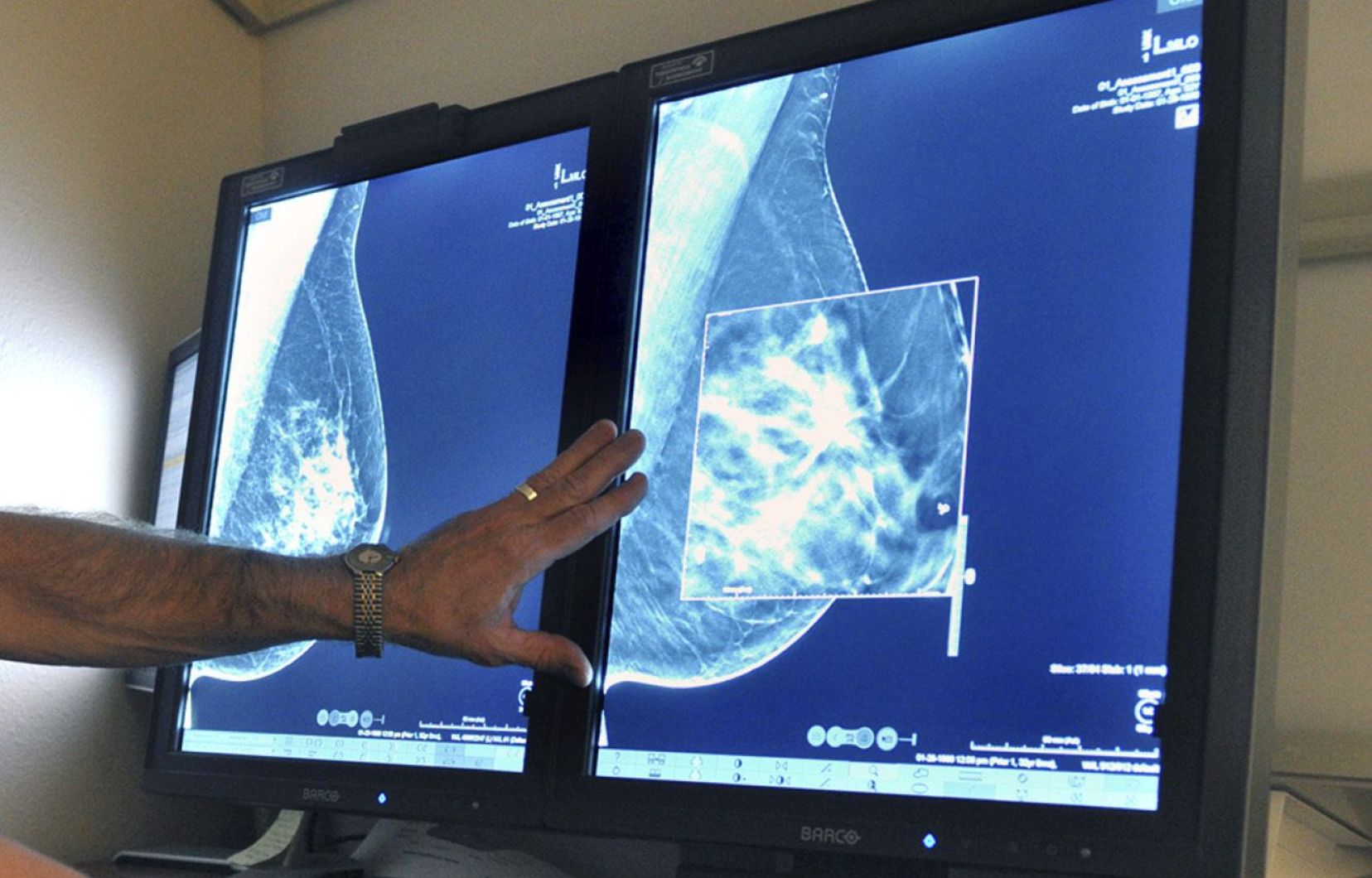
In order to detect breast cancer in women with an increased risk of its development, the Quebec Cancer Foundation found out that a new test that describes as a revolutionary will soon be available in the province’s cottages.
The test comes from a perspective study that evaluated a new screening strategy that takes into account the risk of every woman. This tool, developed as part of the study, combines saliva analysis into a breast cancer risk calculation questionnaire in a personalized manner for each woman. The questionnaire takes into account factors such as family history, breast density, hormone exposure and body weight index.
After clinical study with approximately 4,000 women, the tool is ready to deploy for the population. The Quebec Cancer Foundation Foundation expects the test to be approved by the end of 2025. After this step, the tool will have to be the subject of the pilot project in the region before all available in all Quebec.
At present, access to breast cancer screening is based only on age criterion. When they reach 50 years old, Quebecers are invited to go through screening mammography every two years. In six cancer, however, it is detected in women under 50 years of age.
“If we detect breast cancer soon, at the zero stadium, the smaller happy will die.” The rate of cancer survival detected in phase 1 is between 98 and 100 %, while in phase 4 it is 23 %. We think it makes a difference and this tool would allow us to fairly detect breast cancer earlier, ”says Karine-Ooooooooooooooooooooooooo-Ooooo-Obeperiel, President and CEO of the Quebec Cancer Foundation Foundation.
Once they know their risk factor, women will have to go through mammography to see if there is cancer or not. Mme Ippersiel adds that this is the choice to know the level of risk or not. “It’s like a breast cancer screening program; there are only 63 % of the population who participates in it when they are entitled to it,” he says.
“Our breast cancer screening program, it works well … From 50 to 74 years, Mrs. Ippersiel would like to specify. We do not want to change the screening mode. We want to provide access to this tool so that women can know their risk of cancer and make informed decisions earlier. »»
Better use the resources
Breast cancer is the second main cause of death from Canadian women’s cancer. For 2024, the Canadian Cancer Society estimates that 30,500 women have been diagnosed with cancer, which represents a quarter of all new cancer cases in women.
After performing the saliva and questionnaire test, the woman will be able to know whether she has a low, medium or high risk of breast cancer. From there, depending on its result, it can be carefully monitored by its doctor, be regularly tested or other tests, such as displaying magnetic resonance (MRI) if it has an important breast density.
The test has the potential to avoid mamlectomy and save lives. “Previously, the stadium means less invasive interventions that we quickly return to return to our lives as much as possible,” says Mrs. Ippersiel.
It is also a cost economy for the health system. “The cancer in the zero phase is less than $ 15,000, while Stadium 4 is $ 370,000. The system would be the winner throughout the series except saving lives, ”emphasizes P.-DG
This also shows that the lack of imaging technicians makes it difficult to access mammograms that may take months in some regions. The new test would prefer cases with a high risk factor.
“If you have a high risk of breast cancer, it is almost certain that we will have breast cancer in our lives.” The war nerve is to find as soon as possible to move and die, ”explains Mme Ippersiel.
The Cancer Cancer Cancer Cancer Cancer Foundation would like that from 30 women Quebec have access to their risk score in breast cancer. Mrs. Ippersiel says that government authorities are well aware of the perspective project, but wants to hold them to ensure that they continue to deploy the test.
The health content of the Canadian press receives funds thanks to a partnership with the Canadian Medical Association. Canadian press is the only responsible for editorial elections.

Leave a Reply