“There’s a deep work for reinvesting ideas,” says Diane Gistal at a collective exhibition, which she commissioned at the Stewart Hall Poite-Claire’s Stewart Hall. IN AfrotoposIn his work, the question of this African utopia, which was thought of by the Senegalese economist and writer Felwine Sarr AfrotopiaThe real reference to who is also the director and founder of Nigra Iucents, turned for the recognition and promotion of contemporary African, Caribbean and dispric art with which the gallery cooperates for this occasion. He explains that it is now “questioning what African utopia is, but also fertilizing, investing active African utopia rooted in real and African vocabulary”.
“I find it interesting that basically, when you carry this type of project, it becomes political. But I don’t think I want to decolize imaginary, “, specifies Diane Gistal, who” invested imagination “in this event to make it easier to dream. In large. In fact AfrotoposUtopia takes place and will take place in various and unique ways in the works of Afro-Posluchors and African artists Berirouche Feddal, Anna Binta Dialo, Marie-Danielle Duval, Damien Ajavon, doing Cofia, Ibiyane and Roxane Mbang. “It is good to say that in Quebec we have the opportunity to present this international discourse, which has a very specific connection with the real Quebecer, Canadian,” she said.
These “diaspora they write”
Because for the Commissioner, “Afrotopia” is also written outside Africa, mainly because of these “diasporas they write”. Among other things, it evokes the video Triptych Anna Binta Diallo, where Senegales and Manitoban approach its two identities. “There is a constant negotiation among his cultural references, his stories, stories, archives,” said Diane Gistal. “Afrotopia” would therefore be equally exciting to consider the diaspora. “It is said that we will get out of this essentialism that there is a plurality of voices, lived, people who transport Africa outside Africa, people who think Africa nostalgia for their African parents,” he adds. It is especially this discourse that offers Afrotopos.
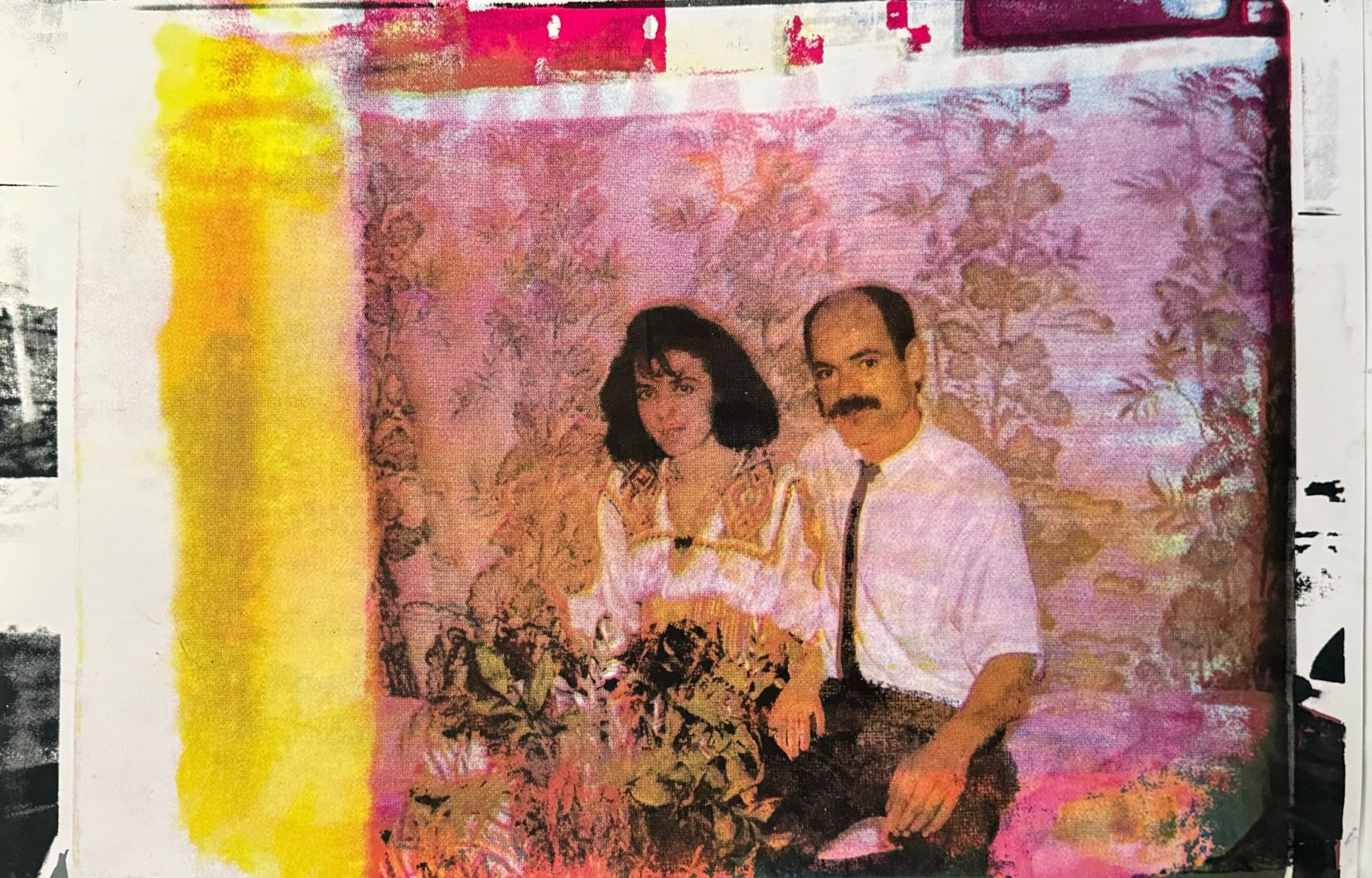
The grandmother’s character is ubiquitous at the exhibition. “It’s really a coincidence, which is no longer so,” says Diane Gistal. And to continue: “I realized that thinking about this current for artists is the inheritance of their heritage, their history. It is also undoubtedly the question of the decentralization of the Western patriarchal concept. “African societies are often matriarchy and culture, and history is based on these numbers,” he says. To think about it today and that the African tomorrow, should we not observe yesterday? “Perhaps the future is embodied by this picture in the great -grandmother of Damien Ajavon, one of the only archive pictures that exist in this Queen’s Senegalese,” notes the Commissioner. We see a grandmother smoking a pipe in an assertive posture and “there is something very modern, very feminist,” she said. From the past, in the present, in the future, the temporality is to be rediscovered Afrotopos.
Construct
For many and for a long time, Africa would also be a continent of the future, where everything is possible, because in western collective imagination Africa is drowned in its delay to catch up. “In his work, Felwine Sarr says that thinking about Africa tomorrow doesn’t really think of her coincidence with the present,” the Commissioner notes. According to her, this rhetoric would have a mistake to report everything on the next day without having the opportunity to invest the present. “It is especially interesting in West African cosmogoni is the question of non -linearity in which temporality intersects,” says Diane Gistal. Maybe when he’s tomorrow. Or maybe tomorrow was the day before yesterday. “Maybe, seeing the horizon, it doesn’t look high or far, but it looks. Everything is possible.
Eventually, Afrotopos It does not pretend to say what should be deconstructed, but that it would be necessary to build apart. “It allows you to change the focal length and realize that everything is about perspective and view,” concludes Diane Gistal.
Afrotopos It is indeed a demonstration that the future is already African and that it is tangible.

Leave a Reply